
- Volcanoes National Park protects approximately one-third of the world’s remaining mountain gorilla population, with over 600 individuals living across the Virunga Mountains ecosystem.
- Gorilla permits in Rwanda cost $1,500 per person as of 2026, with treks limited to eight visitors per gorilla family per day to minimize stress on the animals.
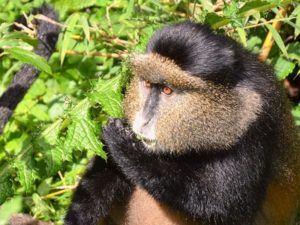
- The park offers multiple activities beyond gorilla trekking, including golden monkey tracking, volcano hiking, and cultural experiences with local communities.
- The best time to visit runs from June through September and December through February when trails are drier and more accessible.
- Conservation efforts have resulted in a steady increase in mountain gorilla populations, making Rwanda a global leader in primate protection and eco-tourism development.



Volcanoes National Park: Location and Geography
Volcanoes National Park occupies 160 square kilometers in northwestern Rwanda, forming part of the larger Virunga Conservation Area that extends into Uganda and the Democratic Republic of Congo. The park sits along the border with these neighboring countries, creating a transboundary protected area that allows mountain gorillas to roam freely across international boundaries.
The landscape consists of five volcanic peaks within Rwanda’s borders: Karisimbi (4,507 meters), Bisoke (3,711 meters), Sabyinyo (3,669 meters), Gahinga (3,474 meters), and Muhabura (4,127 meters). These dormant and extinct volcanoes create a dramatic backdrop for wildlife viewing, with their slopes covered in montane and bamboo forests that provide ideal habitat for mountain gorillas and other primates.
The park’s elevation ranges from 2,400 to 4,507 meters above sea level, creating distinct vegetation zones. Lower slopes feature bamboo forests where golden monkeys thrive, while higher elevations transition into hagenia-hypericum forests and alpine meadows. This varied topography supports rich biodiversity beyond the famous gorillas, including over 200 bird species, forest elephants, buffalo, and numerous small mammals.
Mountain Gorilla Trekking: The Main Attraction
Gorilla trekking in Volcanoes National Park represents the pinnacle of primate viewing experiences worldwide. The park is home to twelve habituated gorilla families, each with its own territory, social structure, and personality. These families range in size from approximately ten to over thirty individuals, led by a dominant silverback male who makes decisions about movement, feeding, and group safety.
The habituation process, which takes two to three years per family, gradually accustoms gorillas to human presence without altering their natural behaviors. Researchers and trackers spend thousands of hours with each group, slowly reducing the distance until the gorillas tolerate observers at close range. This careful process ensures that tourism does not disrupt gorilla social dynamics or health.
Each gorilla family has distinct characteristics that make every trek unique. The Susa family, one of the largest groups, gained fame through Fossey’s research and includes numerous playful juveniles. The Hirwa family formed relatively recently when a young silverback successfully attracted females from other groups. The Sabyinyo family’s silverback lost one eye and a hand to poachers before habituation, serving as a powerful reminder of past threats.
Trekking begins early in the morning at park headquarters, where visitors receive briefings on gorilla etiquette and safety protocols. Groups of eight tourists, accompanied by armed rangers and trackers, then drive to trailheads corresponding to their assigned gorilla family. The duration of the trek varies considerably based on where the gorillas spent the previous night and how far they have moved since dawn.
Some treks last just thirty minutes, while others require four to six hours of hiking through dense vegetation, steep terrain, and muddy conditions. Trackers who locate the gorillas before tourists arrive communicate via radio, guiding groups to the current location. The physical demands can be significant, though porters are available to assist with carrying gear and providing support on difficult sections.
Upon locating the gorillas, visitors spend exactly one hour observing them from a minimum distance of seven meters. This time limit reduces stress on the animals and minimizes disease transmission risk, as gorillas share approximately 98% of human DNA and are susceptible to human illnesses. Groups must wear face masks and cannot visit if showing any signs of illness.
The actual experience of watching mountain gorillas defies description. Silverbacks weighing up to 200 kilograms move with surprising grace through the forest. Mothers cradle infants with tenderness identical to human parents. Juveniles play-fight and swing from vines, occasionally approaching visitors with curiosity before being called back by protective adults. The gorillas go about their daily routines of feeding, grooming, and resting, largely ignoring the humans observing them.
Photography is permitted without flash, allowing visitors to document their experience. The forest environment presents challenges with low light and dense vegetation, but the reward of capturing these magnificent creatures in their natural habitat makes the effort worthwhile. Video recording is also allowed, though some visitors find that simply watching provides a more profound connection than viewing through a screen.
Rwanda Gorilla Permits: Costs, Booking, and Regulations
Securing a gorilla permit represents the most critical step in planning a Volcanoes National Park visit. The Rwanda Development Board manages all permits, which cost $1,500 per person as of 2026. This price point positions Rwanda at the premium end of gorilla trekking destinations, significantly higher than Uganda (\$800) and the Democratic Republic of Congo (\$400).
The higher cost reflects Rwanda’s positioning as a luxury destination and funds extensive conservation programs. Revenue supports ranger salaries, anti-poaching patrols, veterinary care for sick or injured gorillas, and community development projects. Studies show that this investment has yielded results, with Rwanda’s mountain gorilla population growing steadily over the past two decades.
Permits can be booked up to two years in advance and should be reserved as early as possible, particularly for peak season visits. The Rwanda Development Board website offers direct booking, though many visitors arrange permits through tour operators who handle logistics as part of comprehensive safari packages. Only ninety-six permits are available daily (eight visitors for each of twelve habituated families), creating high demand that often results in sold-out dates months ahead.
Age restrictions require trekkers to be at least fifteen years old. This policy protects both young visitors from the physical demands and gorillas from potential disease exposure. Health screening occurs before each trek, with anyone showing cold, flu, or other illness symptoms prohibited from participating. No refunds are provided for health-related cancellations, making travel insurance that covers this scenario worthwhile.
Regulations during treks are strict and enforced by rangers. Visitors must maintain the seven-meter distance, though gorillas sometimes approach closer on their own initiative. Eating, drinking, and smoking near gorillas are prohibited. Flash photography is banned, and voices must be kept low. If a gorilla charges, visitors are instructed to crouch down and avoid direct eye contact, which gorillas interpret as a threat.
The one-hour limit is strictly observed, with rangers announcing when time is up regardless of what the gorillas are doing. This discipline ensures that multiple groups can visit the same family on different days without excessive disturbance. Some visitors find the hour passes too quickly, while others appreciate the focused, intense nature of the experience.
Best Time to Visit Volcanoes National Park
Volcanoes National Park welcomes visitors year-round, though seasonal variations in rainfall affect trekking conditions significantly. The park experiences two dry seasons and two wet seasons annually, each offering distinct advantages and challenges for gorilla trekking and other activities.
The primary dry season runs from June through September, coinciding with summer holidays in many source markets. During these months, rainfall is minimal, trails are less muddy, and hiking conditions are generally more comfortable. Vegetation is somewhat less dense, potentially improving visibility for gorilla viewing and photography. This period sees the highest visitor numbers, with permits often selling out months in advance.
A shorter dry season occurs from December through February, offering similar advantages with fewer crowds than the June-September peak. Temperatures are slightly cooler during these months, making the physical exertion of trekking more comfortable. The holiday period around Christmas and New Year sees increased bookings, but January and February often have better permit availability than mid-year.
The long rainy season from March through May brings heavy afternoon downpours and consistently muddy trails. Trekking becomes more physically demanding, and rain can dampen the experience literally and figuratively. Permit prices remain the same, but availability is better, and some lodges offer discounted rates. Dedicated wildlife travelers who prioritize gorilla viewing over comfort may find this period rewarding, as the gorillas remain active regardless of weather.
The short rainy season in October and November presents similar conditions on a smaller scale. These months serve as shoulder season, with moderate rainfall, decent permit availability, and occasional lodge discounts. The landscape is particularly green and photogenic after the long dry season.
Temperature variations are more related to elevation than season, with mornings often cool and misty regardless of time of year. Visitors should prepare for temperatures ranging from 10 to 20 degrees Celsius, with conditions changing rapidly as clouds move across the mountains. Layered clothing that can be adjusted throughout the day proves most practical.
Wildlife viewing beyond gorillas follows similar seasonal patterns. Golden monkeys are visible year-round, though tracking is more pleasant during dry periods. Bird watching peaks during the rainy seasons when migratory species are present, and resident birds are in breeding plumage. The park’s other mammals are less reliably seen, as dense vegetation and their shy nature make encounters unpredictable.
Volcano Hiking and Adventure Activities
The volcanic peaks that give the park its name offer challenging hiking opportunities for visitors with time and energy beyond gorilla trekking. Each volcano presents different difficulty levels and rewards, from half-day excursions to multi-day expeditions requiring camping.
Mount Bisoke, the most popular hiking destination, features a beautiful crater lake at its summit. The round-trip hike takes approximately six hours, ascending through various vegetation zones before reaching the 3,711-meter peak. The trail can be muddy and steep, requiring reasonable fitness levels, but the views across the Virunga chain and into the crater lake justify the effort.
Mount Karisimbi, the highest peak at 4,507 meters, requires two days with overnight camping near the summit. This challenging trek passes through multiple ecological zones, from bamboo forests to alpine meadows, offering opportunities to see unique high-altitude flora. Summit views on clear mornings extend across Rwanda, Uganda, and the Democratic Republic of Congo.
Mount Sabyinyo’s summit marks the point where three countries meet, allowing hikers to stand in Rwanda, Uganda, and the Democratic Republic of Congo simultaneously. The climb includes sections with fixed ladders and requires a head for heights. The round-trip takes approximately eight hours, with spectacular views rewarding those who complete the ascent.
Shorter hikes include trails to Dian Fossey’s grave and the former Karisoke Research Center. This half-day trek climbs to 3,000 meters, passing through areas where Fossey conducted her research. The gravesite, where she is buried alongside gorillas killed by poachers, serves as a pilgrimage site for those inspired by her work. The ruins of her cabin and research facilities provide tangible connections to her legacy.
Cave exploration offers another activity option, with Musanze caves extending 2 kilometers underground. Formed by ancient lava flows, these caves once served as shelter during conflicts and now welcome tourists for guided tours. The caves provide geological context for the volcanic landscape and offer respite from rain on wet days.


